

There are many ways to illustrate a point, but seeing as it's Friday, I believe a hapless bunch of individuals trying to load a jet ski into a van is the way to go. This video is proof that if you don't plan things, prepare, think things through, you're never going to get anywhere. Know what you're up against...In this case weight and water.
Showing posts with label business intelligence. Show all posts
Showing posts with label business intelligence. Show all posts
Unwilling to listen or just too eager to please?

from shoutdaily.com
A recent debate on Linkedin saw 147 responses to the question 'what is the number 1 critical mistake sales people make in the sales process?' 30% of respondents claimed 'lack of listening caused by too much talking' was the issue. This is a fairly understandable issue as the natural instinct when faced with a high pressured meeting is to defend your product and promote the positives.
But let's be honest here, the customer doesn't care about your product. The customer cares about solving the problem they have. That's their number one priority. It doesn't matter if it's you that solves the problem, they just want it solved. So going in all guns blazing telling them how wonderful your product is and how well it's benefited others is never really going to impress, because for this particular client, past successes are irrelevant. If you can't deliver on their problem, they're not interested.
Which is why using trigger events immediately gives you the upper hand. You've arrived at the meeting knowing roughly what the problem is, where the gap in the organisation lies. It's then up to you to learn more about the issue, gather intelligence as to what the real pain is and adapt your product to suit the need, rather than fit a square peg in a round hole. The number one advantage of your product might not necessarily fix this problem, but another element might just. Entering a meeting with the focus on the customer's trigger event, apposed to your view on your product, instantly puts your mind in the right place to think this through.
Ipad sales highlights hunger for online news

This is hands down the least technical quote that'll you probably ever hear on this blog (you can hold me to that) but I recently asked an Ipad buyer the advantages of the new Apple device and their exact quote was 'well, it's just like a big Iphone isn't it.'
Make no mistake, if the draw of an I-PHONE was to make phone calls, bigger would certainly not be better. Apps are compatible for the Iphone, and are therefore easy to use, so that's not the 'needs to be bigger' issue. So that leaves web access being the key reason as to why bigger is better in this respect. Using the Internet on the Iphone has always been clunky and the IPad provides a greater platform on which to browse whilst on the move.
Apple yesterday announced 2 million unit sales since the launch of the IPad. And that's before it's released in many countries. That doesn't bode well for print media. The message here is that people are happy to consume web news on the go and with automated web search now able to hone in on news relevant to the user, this trend is only going to go one way.
Time flies when you're on the Internet

Did anyone notice just how quickly Lord Triesman resigned from his post as head of England's 2018 World Cup bid yesterday? The Sunday Mail broke the rather unfortunate Triesman story (thanks a lot for backing the bid Sunday Mail) on Sunday Morning and Lord Triesman was already clearing his desk at about half one in the afternoon. A few years ago a scandal like this would've taken at least a week to play out.
But scandal spreads like wildfire now. Stars of the globe must live in constant fear that they are 5 minutes away from trending on Twitter or having the whole population of Facebook sharing a link to their latest PR disaster. Gossip is travelling faster than the speed of light.
For business this means reacting with the reflex of a Jedi ninja. There is no longer time to spend weighing up options in endless round tables. If you're not aware quickly, and you don't react swiftly, then the stable door has already been open for too long. To have any chance of keeping up, you've got to be on board the train. Those not embracing the online surveillance technology available are lagging behind further and further by the day.
Sell for a reason

I love sales tips, genuinely, I can think of little better than spending an afternoon listening to endless advice about the best way to seal a day. Brush your hair to the right, smile at least fifteen times in a pitch and tie your laces in a double knot to show true commitment. Although all of this is probably very good advice I'm not sure if it will truly help in winning a customer.
If someone has a leaking tap they probably won't care if you call on Wednesday, compliment their shirt or pat the dog. They probably just want you to fix the tap. So the plumbers job is not to sit on the front porch politely waiting for a pipe to burst, their job is to make sure that when there is a problem, they are the one picked to do the job.
Having a job to do, a problem to fix is half the battle. By all means tie your laces in a double knot (it's just common sense really) but ultimately I'd focus on having something to sell that's actually going to suit the prospective buyer. If a plumber bought round a mop to fix a pipe, my guess is they probably wouldn't be allowed to fix it.
Time for a catch up

This article is provided by Artesian Solutions, delivering you *intelligent* news, personalised to match your business needs.

What a busy week it's been for the online world, I think all I can do is provide a catch up service, summing up some of the highlights, because to comment on just one thing would seem extremely blinkered, so:
In response to Rupert Murdock's plan to charge for online news content Google has admitted it is working on technology to help newspapers make money from their website readers. Twitter however have gone against the tide completely and decided their going to rely on advertising revenue 'leaving the door open' to advertisers to access the 45 million tweeters out there.
Facebook have decided to expand further by coming up with 'Facebook Lite' a new site that cuts down on unnecessary applications to provide quicker speed for those with slow or poor Internet connections. Although currently only available in the US and India if it cuts out things like the 'what kind of vegetable are you?' application I personally can't wait to ditch the old and bring in the new.
The PM has apologised to WWII code breaker Alan Turning over the terrible treatment he received from the British government, a statement long overdue and Steve Jobs is back to a standing ovation after his recent liver transplant.
On the lighter side of things Google Maps have announced they are launching the World's 'biggest' game of online Monopoly which will see gamers being able to purchase real streets (does that mean you really have to go to jail too?) and apparently in South Africa a carrier pigeon has beaten the countries ADSL service in the delivery of data. 'Winston the pigeon' took just two hours to fly a memory stick 60 miles, in the time the ADSL had sent 4% of the data.
Right, time for a lie down I think, must fly (that's for you Winston)
Daily Business News Round Up 11/09

The Artesian blog takes a look at the business headlines, For personalised daily news, contact Artesian
Wetherspoon sales stabilise amid profit fall - JD Wetherspoon, the pub owner, reported a 17 per cent fall in full-year profits after the company was forced to write-down the value of pubs that traded badly in the depths of the recession.
Pre-tax income totalled £45 million in the year to July 26, down from £54.2 million, following exceptional charges of £21.1 million. Those costs included £6.5 million of pub write-offs, and a further £9.4 million knocked off the company's fixed assets. (full story)
Rover bosses took £42m from firm - A report into the collapse of carmaker MG Rover will say that five executives took £42m in pay and pensions from the troubled firm, the BBC has learned.
Independent inspectors said the men behind the takeover and the executive they appointed enriched themselves as Rover headed for insolvency. (full story)
Twitter expands rules to allow advertising - Twitter, the fast-growing microblogging site now seeking ways to make money, expanded its terms for users on Thursday to allow advertisers to reach the Internet site's more than 45 million monthly visitors.
Twitter, the two-year-old venture capital-backed company that lets people send an unlimited number of 140-character messages, is just now beginning to ramp up efforts to monetize, or gain revenue from, its popular site. (full story)
No Change: Bank Keeps Interest Rate On Hold - The Bank of England has - as expected - opted to keep the interest rate unchanged at 0.5%.
The Bank of England has - as expected - opted to keep the interest rate unchanged at 0.5%. (full story)
Sports stores face fraud inquiry into claims of price-fixing - The Serious Fraud Office has launched an investigation into alleged anti-competitive activities and fraud involving the sportswear retailers JJB Sports and Sports Direct that could lead to significant fines and even jail sentences if such practices are found to have occurred.
Following a referral from the Office of Fair Trading, the SFO confirmed that it had beguns proceedings after JJB approached the OFT in exchange for immunity in January. Yesterday, the offices of both companies were raided as part of a wide ranging investigation into alleged "cartel activity" between the chains to lessen competition in the sportswear sector. (full story)
Now Literature heads online

This article is provided by Artesian Solutions, delivering you *intelligent* news, personalised to match your business needs.
You could argue it's long over due really. After all, out of all the arts you'd put your house on literature beating music and film into the online environment and although there have been several tame attempts to publish online, this new effort from Google will surely be the one that allows the art to really take off.
The fact that the concept is drawing in much more media attention than Spotify's rapid rise to web dominance or Youtube's big deal to bring back music videos to their site suggests that online literature is something that people truly care about.
The power you could get from an online library is potentially staggering. The Internet is a storage space for data and the idea of being able to search, not just for specific books but specific paragraphs, maybe even sentences is quite incredible.
Here at Artesian, we are proving the value of pinpointing specific information for specific needs. As more material is added to the web, this value will only increase. Whilst many are debating the pros and cons of putting literature online, there's no debating that it could well revolutionize the art, providing it with a new lease of life, as well as offering opportunities to a greater number of writers than printed literature ever could. This could well be an exciting new chapter for publishers, authors and readers a like.
Is Skype going the same way as News Corp?

This article is provided by Artesian Solutions, delivering you *intelligent* news, personalised to match your business needs.
When Ebay took on Skype four years a go they had big plans to revolutionize their marketplace platform, plans which never really took off. The idea was to provide video trading to users, allowing them to bargain and negotiate more openly. In amongst the finer detail of these outlines, close comparisons with the aforementioned News Corp can not be ignored.
Although they probably wouldn't admit it, the ultimate ambition of the project was to rake in endless advertising money through "pay-per-call" services which could see advertisers paying between $2 and $12 per telephone call each time someone clicked on their link." This business model (relying on advertising) is all too close to the reason why Rupert Murdock has taken the bold decision to start charging for online content.
The new investors in the online communication service can only have parallel ambitions (you don't pay $1.9 billion for something unless you plan to make a lot of money). With 481 million registered users the potential is endless. But, as Ebay have shown, without a successful way to monetize, the investment is doomed to failure. Although, of course, there may be differing plans in the minds of the investors, I don't think it'll be too long before charges start creeping into the Skype network somewhere along the line.
Murdock has cushioned the blow for everyone else thinking along the same lines and once a trend has started, it's not to long before everybody jumps on the bandwagon. With their staggering number of users, Skype's demands can afford to be small, but the ring fence has been hurdled, and I suspect it's only a matter of time before there's no ring fence at all.
How can Yahoo compete with Bing when they're relying on them?

Is it just me finding it slightly peculiar that Yahoo and Bing still want to compete as search engines despite their recent deal? Surely the idea was to come together to make strides against Google, not continue fighting unnecessary battles against each other?
The senior vice president of Yahoo Prabhakar Raghavan claims that 'we collaborate on the back-end but we are competitors on the front-end'... That's the equivalent of two boxers strapping each other's gloves up before heading out to the ring and trading blows. It seems like even Yahoo and Microsoft aren't quite sure about what kind of relationship they're forming.
What it does suggest is that search engines are losing control over the web. All these crossovers (integrating advertising, relying on one another to power search queries etc) seem like indications that no one is really content with the road they're currently heading down. It's simply no longer working. The Internet is growing too fast and the search engines are struggling to keep everything inside the ring-fence.
Personalized, online material seems the only logical way forward. Especially for web based business activity, where sales intelligence is becoming so vital. Search engines are trying to control the world, when really, sometimes all you need is a nice little island.
Friends Reunited Prove that taking your foot of the gas is fatal

Keeping an eye on the road
In 2003 Friends Reunited was deemed to be worth a 160 million pound investment. In 2009, like a rescuer pulling remains from the rubble, DC Thomson has taken the troubled site off the hands of loss making ITV for the considerably reduced amount of 25 million with the focus largely to merge a subsidiary 'genesreunited' with their genealogy website findmypast.com. I would be amazed if there are any plans at all to try and revitalise the original success of the friends model.
So what went wrong? The simple answer is nothing. The engine was running and the drive was smooth, but as ever newer models became available and ITV decided against trading in for an upgraded vehicle.
When the buzz around Friends Reunited first hit it was an incredible concept. The excitement of finding those you'd lost contact with was something very new. But Facebook and Myspace wiped the excitement very quickly, giving everyone their own webspace, and making it much easier to stay in touch with friends, making Friends Reunited a dated product almost over night. ITV either weren't tracking the market, or made a fruitless decision to swim against a tide with their hands tied behind their backs and an anchor strapped between their legs.
In turn, Myspace is now battling that very same strong current and many believe Facebook will go the same way when the next bigger and better phenomenon comes along. Whether they will or won't, only time will tell but at least Facebook is swimming in the right direction. An article this week suggested that the site is aiming to tap into the online shopping market which is, as recent results show, currently flourishing. If successful this could make Facebook a bigger online platform than it already is (which is a somewhat terrifying thought in a way). Imagine the power it will hold over both retailers and consumers alike, bringing them together in what will be without question the biggest market place in history.
None of this is fluke. Someone, somewhere is constantly looking for opportunities such as this one to keep Facebook ploughing down the motorway in fifth gear. Unfortunately for Friends Reunited, they didn't even think to check their mirrors.
Daily Business News Round Up 06/08
The Artesian blog takes a look at the business headlines, For personalised daily news, contact Artesian
Loss-Making ITV Sells Friends Reunited - ITV has sold Friends Reunited to Beano owner D.C. Thomson for £25m as it announced half yearly losses of £105m.
The broadcaster said advertising revenue was down £108m - 15% - in what it described as the worst ever year in UK TV advertising. (full story)
Rupert Murdoch to charge to view News Corp's online news - News Corp chairman plans to charge readers of the websites of all his newspapers within the next 12 months.
Mr Murdoch, chairman of News Corporation, pledged that the media conglomerate would “assert its copyright” over all its newspapers online, including the Sun and the News of the World (NOTW). (full story)
Google buys video technology firm - Google has announced a deal to buy On2 Technologies, which provides technology that should help improve video quality on the internet search engine.
The deal for $106.5m (£62.7) should be concluded later this year, subject to On2 shareholder approval. (full story)
Sliding profits at Standard Life add to insurers’ day of gloom - Standard Life capped a turbulent day for the insurance sector yesterday after it reported that first-half profits had fallen by more than a third, largely because of sliding sales in Britain.
Its results, described as “slightly disappointing” by one analyst, came as the British division of Axa, the French insurer, announced plans to cut 350 jobs, and Old Mutual, the Anglo-South African insurer, named a new chairman amid falling profits. (full story)
Manila's San Miguel in talks to sell stake in liquor arm - Food-to-power Philippine conglomerate San Miguel Corp (SMC.PS) (SMCB.PS) is holding talks with foreign groups to sell a substantial stake in its liquor arm in the coming months, the company's president said.
Ramon Ang told reporters the sale of a stake in Ginebra San Miguel Inc (GSMI) (GSMI.PS), the country's largest liquor firm, would likely be concluded before a planned divestment of up to 49 percent of the group's food arm San Miguel Pure Foods Co Inc (PF.PS) (PFB.PS) in the next six months. (full story)
Sales tips, join the dots

You must be in the know
Take a look at these five sales techniques taken from a variety of guides and notice the obvious trend:
1) Answers to questions can make or break a deal. If you don’t have the answer, you need to find it.
2) When you make the phone call, make sure you are absolutely certain about the product.
3) Ask the right questions and the prospect will tell you what they want and how they need to be sold.
4) Know your customer's business. Customers expect you to know their business, customers and competition as well as you know your own product or service. Study your customer's industry. Know it's problems and trends. Find out who his biggest competitors are.
5) Develop a list of reasons why a customer should buy from you.
The trend is quite simple, these tips are not about the sales technique at all, they all point to having a firm backdrop of knowledge before you can even start thinking about selling. This knowledge, as shown above, can provide many advantages whether it be answering questions to impress, or developing a list of triggers indicating why you are right for the company in question.
Of course, gaining this knowledge is easier said than done. But companies such as Artesian are making it much easier to gain sales advantage without having to put in crazy hours to do so. Especially in these trying times for businesses it is essential to have the edge over your competitors and unfortunately, not having the knowledge is likely to result in not having the business.
The famous sales saying is 'don't sell the product, sell the advantages of the product' to the customer. Knowing exactly what the client wants and the market they're wanting it in, goes a long way to achieving this. Finding your sales advantage has never been so important.

Keep the Window Open

Blocking a customer's view in is bad enough but not looking outside spells disaster
An article today highlighted research showing that more than half of small businesses in the UK do not have an online presence. An industry expert went on to suggest that "Not having a website is like leaving your shop front boarded up or refusing to tell customers anything about the services you provide." Of course this is true. I certainly search for new services online and would suggest many others do the same.
But worse still, not exploiting the web has two sides to the boarded window. Of course, you're blocking potential customers from seeing in, but you're also blocking your view out. How can you get the most out of sales if you can't see whose walking down the high street, or what other businesses around you are offering?
And whilst window shoppers can be drawn to you, being online can present the chance to go and actively find new customers. Any networking requires knowing the right thing to say and web resources can provide you with the perfect opener. If you approach someone at a bar with nothing to talk about, the likelihood is you'll be sat back down by yourself in no time at all. But having a starting point, a trigger of conversation will give you a much better chance of getting the drinks in.
So when thinking about building a web presence, don't see it completely as an exercise to bring customers to you, see it also, as a way of stepping outside, stretching your legs, and finding out everything you want to know about your high street. Most importantly, see it as a way of introducing your services, rather than explaining them.
Step Outside now
A Post That Paints 1000 Words
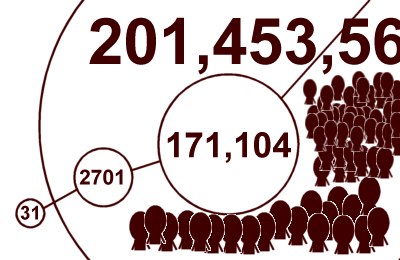
Drops in the ocean can be bigger than you think
Everyday I see hundreds and hundreds of news stories, it really is incredible how so many incidents can take place in the space of one day. With constant scandals hitting the major headlines and a flooded database of online updates it can sometimes be hard to get the real value of the news and the detail it can offer. I was looking over an article this morning, a very simple breaking story which opened like this:
American Express launches social media site for business owners
American Express OPEN today unveiled the new OPEN Forum, an online resource and networking site for business owners.
The site is designed to forge meaningful business connections and provide practical, actionable information and insights from influential bloggers, industry leaders, and savvy entrepreneurs. In addition, the site will aggregate relevant online small business conversations from Twitter.
At face value, this is a story about a company launching a product, that's it. But think about what information this could give to a competitor. Here are just some of the points that this article can raise for a rival company:
- American Express want to expand their service to businesses, how else are they doing it?
- How are we interacting with our business customers, Are we prepared to launch a competing product?
- Why have they chosen social media? How are we using social media?
- Why have they launched now? Are business owners currently struggling to network?
- Do we provide any networking services for business owners?
- Are other rival companies launching these initiatives?
- Will this affect our client list?
- Could we use the forum to our advantage to gain new customers?
- Should we increase our online spend?
These debates and planning measures can be taken from two paragraphs of an everyday news story that will most likely creep under the radar of most headline pages. Think how many departments and strategies it could involve. With this in mind imagine what could be taken from constantly tracking your sector. One paragraph can suddenly seem quite important.
Sidetracked

Sales lingo
Having recently compiled a list of (hopefully) useful business news sources I am currently working on a list of sales tips, searching high and low to find the best available advice from the best available sources. But whilst searching I stumbled upon a website explaining the origins of certain terminology often heard in business circles. So whilst it may be a while before the sales blog is up, why not kill a bit of time by understanding some of the jargon that surrounds the sales market:
"Pull out all the stops" originates from pulling out all the stops on an organ, thus increasing the volume of the instrument.
"catch 22" originally the title of a book about a reluctant wartime pilot whose only alternative to serving was declaring himself mad. The "catch 22" was that the act of applying for certification was deemed the act of a perfectly sane man.
"Cut and run" was originally a sailing term, cut the ropes and run, before the wind.
"Left in the lurch" A lurch in the card game cribbage meant scoring only 31 against an opponent's 61, thus being left well behind.
"Loose cannon" Back in the days when sailing warships were armed with enormous cannons on wheels, a tethered cannon could cause a lot of damage if it broke lose.
(TO SEE MORE FOLLOW THE LINK ABOVE)
To get further insight on sales visit
Cut the cutting

All too easy
"I believe so strongly in the advantages of the semantic web and what can be achieved with the technology. It provides an opportunity to do things differently, to give a company an edge in a time when an edge can make all the difference."
Sadly, despite racking my brain, I really can't remember a day in recent weeks where there hasn't been an announcement regarding job cuts. In the last couple of days, Lloyd's have been at it again, Harley Davidson, Jaguar and the list just goes on and on. If jobs aren't being axed, then employee benefits are, filling in as a suitable replacement and crippling any kind of reward or incentive a worker may of once had.
Of course, the downturn has hit almost everyone and a change to financial outgoings are essential to the majority of companies, but why does the only option seem to involve the one thing that can bring us out of recession, talented staff. The answer is, unfortunately, that it is the easy option in a time of panic. If the wind in a park becomes too strong, a child will instinctively let go of his kite. But what happens when the gust dies down and he wants to resume kiting again? Any parent will tell you, tears and tantrums follow.
There are other things that can be done to cut costs, and not only that, improve a business model. If a football team's losing at half time, the manager doesn't send the players home, he works on tactics and alters how the players approach the game. This is why I believe so strongly in the advantages of the semantic web and what can be achieved with the technology. It provides an opportunity to do things differently, to give a company an edge in a time when an edge can make all the difference.
I shouldn't think I'm the only one who believes that simply cutting jobs will solve the issue? After all, if all these jobs can be cut, what were all these people doing in the first place? A depleted, unmotivated workforce is not the answer, taking the initiative and thinking a bit outside the box, most certainly is.
Learn more about the semantic web with
Man in the Mirror... and the Times, and the Telegraph, and, everywhere really

Won't stop till you've had enough
Now before the hate mail starts flooding in I would just like to state I am a Michael Jackson fan. Like many, I have spent many an evening nursing torn muscles after trying to impress with the famous moon walk and discovering rather quickly, that it does in fact take quite a lot of talent. His songs are timeless and as radio DJ's are currently proving, will continue filling airwaves for as long as airwaves can be filled.
But I have to admit, I can't quite believe just how much his death appears to have affected the global community. The news was simply unavoidable. I was researching on an Insurance website and the top three stories related to Michael Jackson. To check this wasn't just coincidence I tried a variety of other sector specific websites to discover that, sure enough, Michael Jackson also had links to sport, travel and personal loans.
The most interesting thing in my opinion was watching the news spread. My Facebook page was filled with status changes, without exception, talking about the tragic news. Twitter was so busy it continually crashed and Google thought it was genuinely under attack! This online bombardment is becoming increasingly frequent. The coverage of the recent troubles in Iran showed that news networks are actually using social media as a source for content, rather than the other way round, which is quite an odd concept when you think about it.
Headlines now spread incredibly fast, and the morning papers are being forced to play catch up rather than story breaker. If you want to keep on the pulse, online is the place to be.
Go to www.artesiansolutions.com for more info.
Seriously, have they just given up trying?

"By failing to prepare you are preparing to fail"
In times of crisis people, at the very least, want to be reassured by confident, focused leadership. Like troops heading into a battle the spirit is always stronger when led by a commanding general who convinces of victory. But to me, it seems like our government can not even talk the talk and it can only be down to poor preparation.
I've sat and watched time and time again as Gordon Brown delivers a speech which he appears to be making up on the spot, like a ten year old child who hasn't done his homework before a class presentation. Whilst some factors are simply beyond his control:

his speeches are a chance to really lay down his intentions and you have to wonder just how often he is left really winging it. If you spent sufficient time preparing to address the nation would you ever come out with these corkers:
1. "I did maths for a year at university. I don't think I was very good at it. And some people would say it shows."
2. "We spend more on cows than the poor."
3. "Each year India and China produce four million graduates compared with just over 250,000 in Britain."
4. "Our financial discipline has made extra resources available."
5. "I take full responsibility for what happened. That's why the person who was responsible went immediately."
These lines come from someone who is under prepared, unclear and not on the ball. The only way to avoid these kind of blunders is to be completely up to speed with everything that can be thrown at you... Oh, and not picking your nose in prime view helps to. (view video of the famous Gordon Brown nose pick). Of course everyone makes mistakes, but they can be limited. "By failing to prepare you are preparing to fail."
To keep up to date in your sector visit www.artesiansolutions.com
Cyber War

"I'll be hacked"
As someone who studied the Cold War era, it's been fascinating reading the developments of the new 'cyber war' facing the British government. An article last week made close parallels between the two circumstances and the sheer pettiness of current events seems to match up with previous antics rather nicely (recently British officials asked politely if China and Russia wouldn't mind cutting out the 'coordinated cyber attacks' if at all possible... I'm sure the request was noted.)
Whilst online security has always been a talking point, a virtual Cold War is hard to imagine but you can see how some things could play out. Take the Cuban Missile Crisis for example:
- Soviet Premier Nikita Khrushchev adds Fidel Castro as an associate on Linkedin and the pair exchange business cards.
- After talking on Skype they decide they can rather help each other out with a strategic placement of Nuclear weapons. Khrushchev pays for some Cuban land via paypal to speed up the transaction and get moving.
- Khrushchev changes his Facebook status to 'Nikita is constructing nuclear weapons in Cuba' and top friend Fiedel Castro indicates that he 'likes this'.
- American President John F. Kennedy checks Google maps to see that, surely enough, ground work is being laid down for such a plan. He asks Jeeves what to do but with no luck decides to Twitter his naval defences and get them to form a blockade around Cuba.
- A war seems imminent until Khrushchev sends Kennedy an e-card apologising for his actions before setting up a direct messenger account with the American Chief to stop any future misunderstandings. A few days later the pair post pictures on Flickr highlighting their new found friendship and Castro is forced to sell the construction leftovers on Ebay.
Whilst this may not necessarily be how things progress this time around, it will indeed be absorbing to see how things transpire. What's certain, is that the battle to reign the online field is further proof of just how important a weapon the Internet really is.
To keep track online visit www.artesiansolutions.com
Subscribe to:
Posts (Atom)


